Since I was a child, I have had a strong connection to and fascination with the ocean. And with it came an overwhelming fear that I could never figure out — until I had my first child.
I could never describe the obsession, the draw I had. Everything about the ocean intrigued me. But put me in it, or on it, and the anxiety, the fear, the complete terror would take over to the point where I couldn't enjoy any of it.
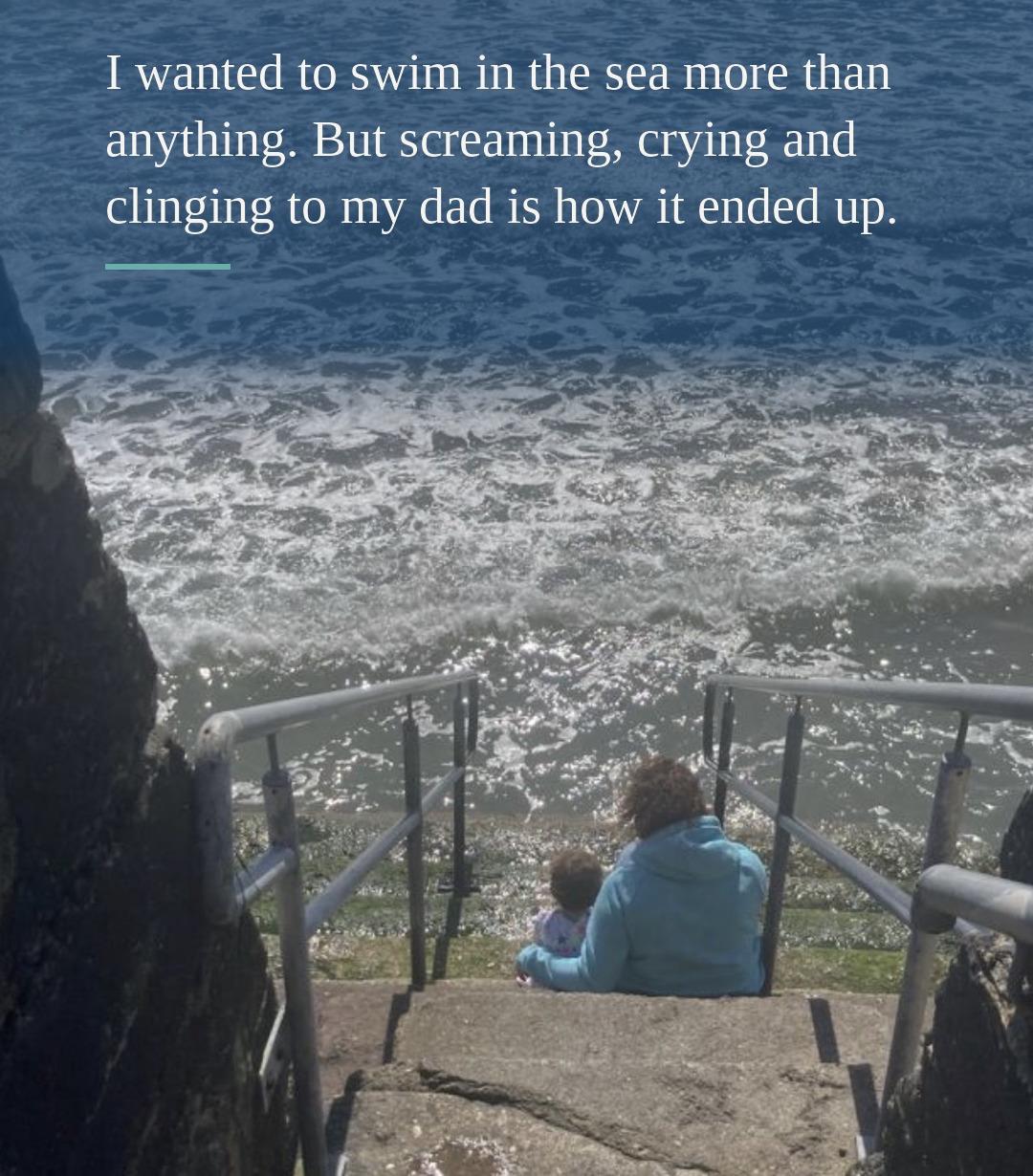
I wanted to swim in the sea — but screaming, crying and clinging to my dad is how it ended up.
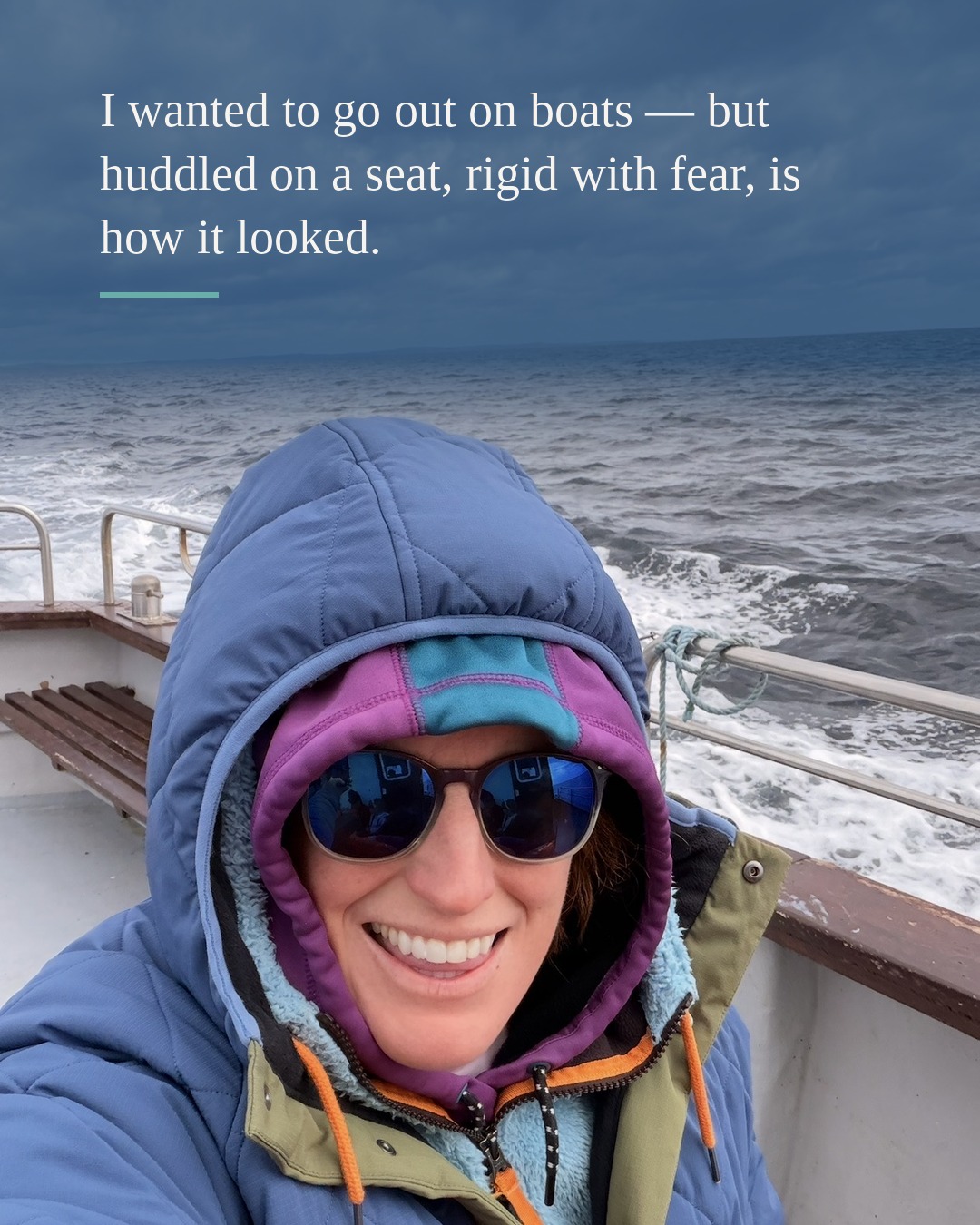
I wanted to go out on boats — but huddled on a seat inside, rigid with fear, is how it looked.
It took away all the joy.
Thankfully, at about fourteen, I discovered wetsuits and surfing, and it changed everything. I had a superhero suit to protect me from whatever it was that scared me so much. And I had a weapon: my board, to hold me and keep me out of the water whenever I needed it. I surfed for years just enjoying the buzz, choosing to ignore whatever lay beneath in case it spooked me too much. One day surfing in Cornwall, a seal popped up in the waves in front of me, and I paddled in so fast there was no going back out that day. I knew so little about what was under the waves. I was entirely led by fear.
As I got older my confidence slowly grew, but it wasn't until I was thirty that I snorkelled for the first time. I was in Australia and took a trip out to a reef with my partner. The anxiety and fear took over my entire body. Every noise, every sensation was heightened to the max. Getting into that water without my wetsuit, without my board — I can't describe the negativity running through my brain. I could see the guide standing out on the reef, watching out to sea, and immediately assumed she was watching for sharks. At that point I had no marine education, and I saw sharks, seals — even fish — as a threat.
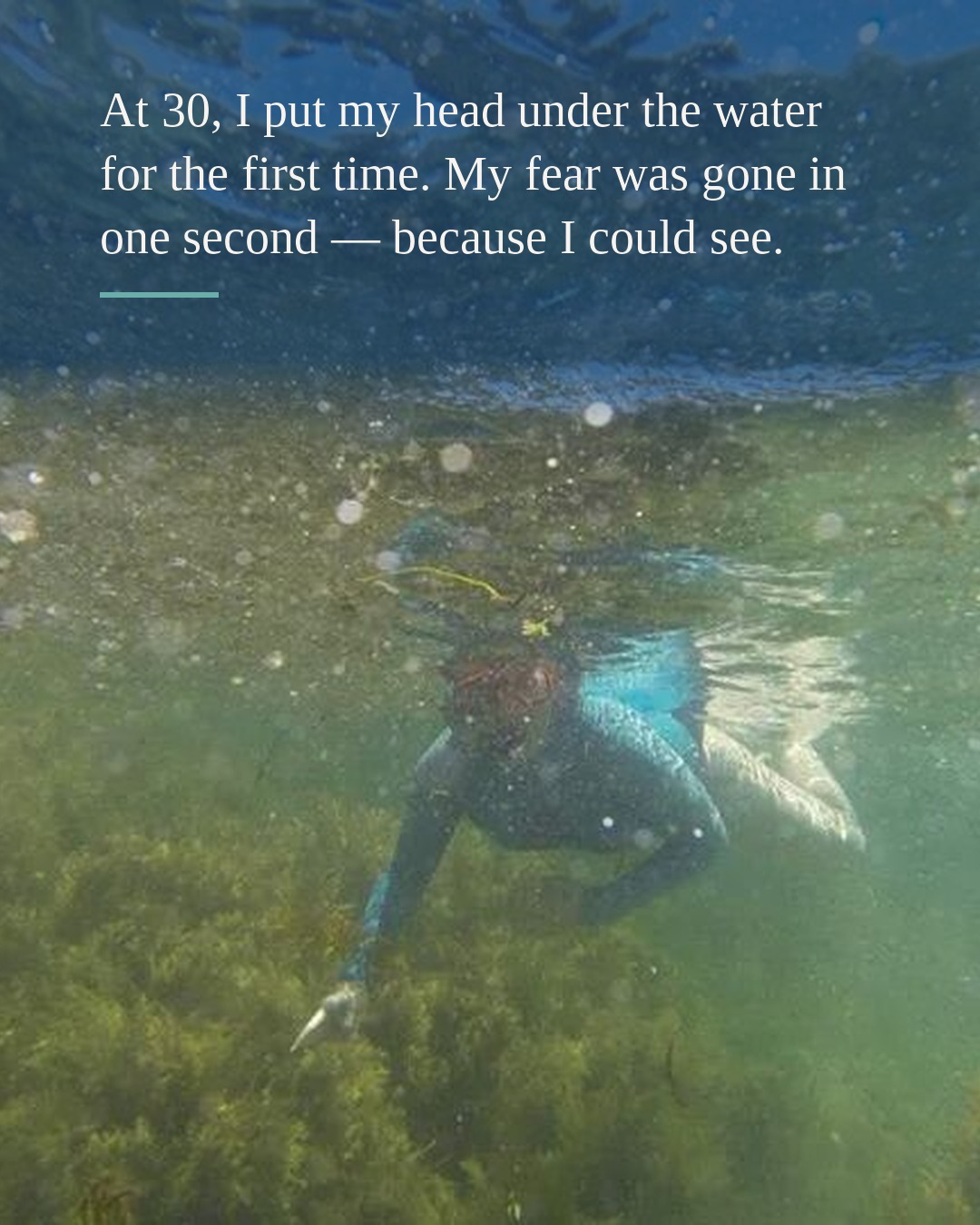
But I did it. With my partner by my side, I put my head underwater with a mask for the first time and saw what was below me.
That is the moment that changed everything.
My fear of the unknown was removed in a single second — because I could see. I could see what was under me. The first thing I noticed was the silence. My ears went under and everything above — the boat, the voices, the wind — was gone. All I could hear was my own breath through the snorkel. Loud at first, all over the place with the anxiety. But as I realised I had control, my breath became steady, and that sound calmed me.
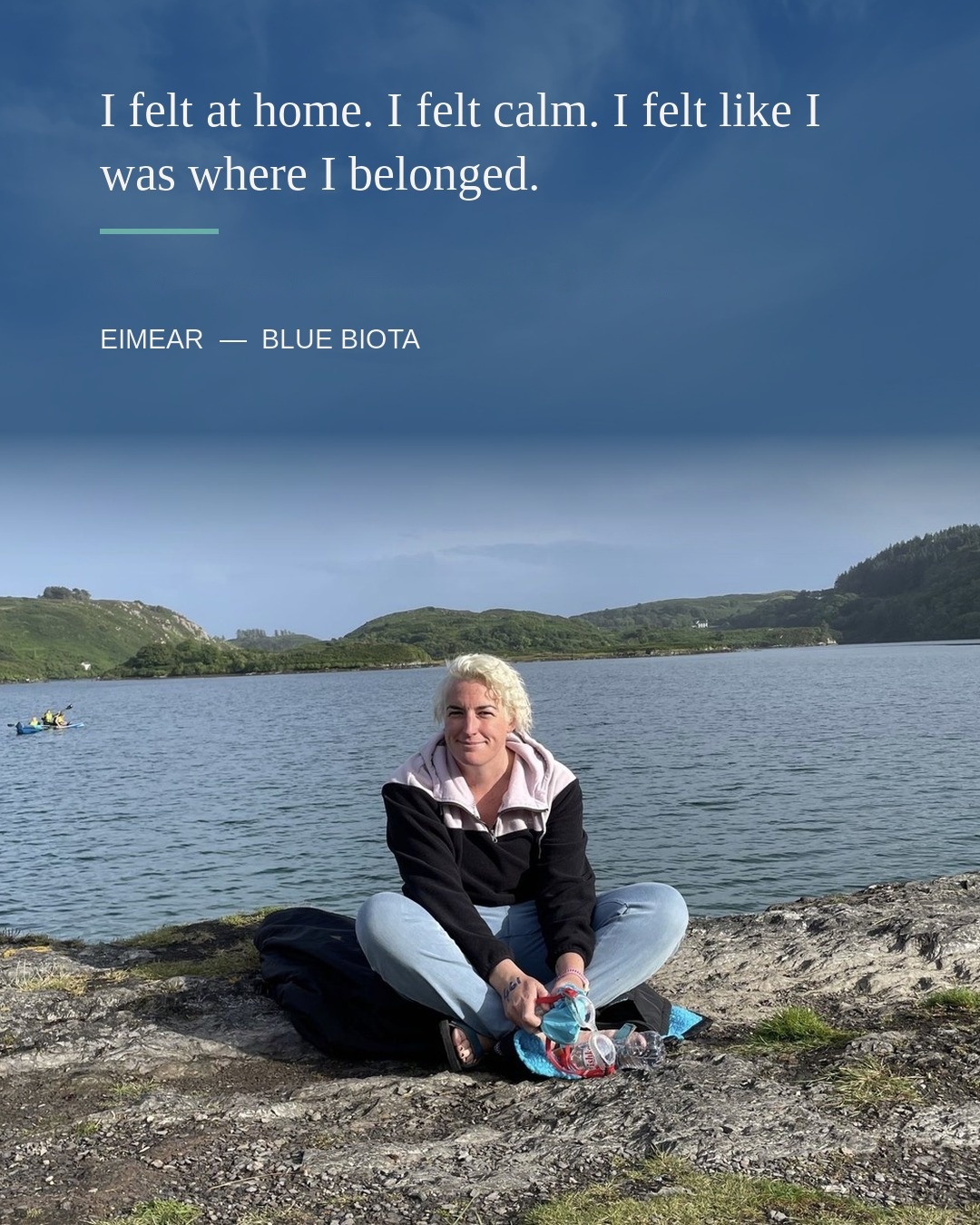
Then I took in what was below me, and it blew my mind. The colours of the coral. The fish moving through it. The sunlight coming down through the water. This unknown world became a picture of colour and movement and life, and the sound of my breathing, the movement of the water, the sensation of my body moving through it became this instant calming in my brain. I felt at home. I felt calm. I felt like I was where I belonged.
Head under, at last.
From that point on, as long as I had a mask and could see what was there, the fear was gone.
But it wasn't until I had my first child, my daughter Stevie, that I really came to understand my connection to the sea — and my disconnect from it.
Stevie was diagnosed with autism at the age of five. We became aware of her sensory issues very early, and began seeing specialists with her from the age of two. It was during this time that I began to recognise myself. Sensory overload: sounds — not always loud ones, sometimes sounds no one else could even hear — touch, the feel of certain things on the skin, temperatures, textures. All of these caused my daughter to react in a state of overwhelm, fear and danger.
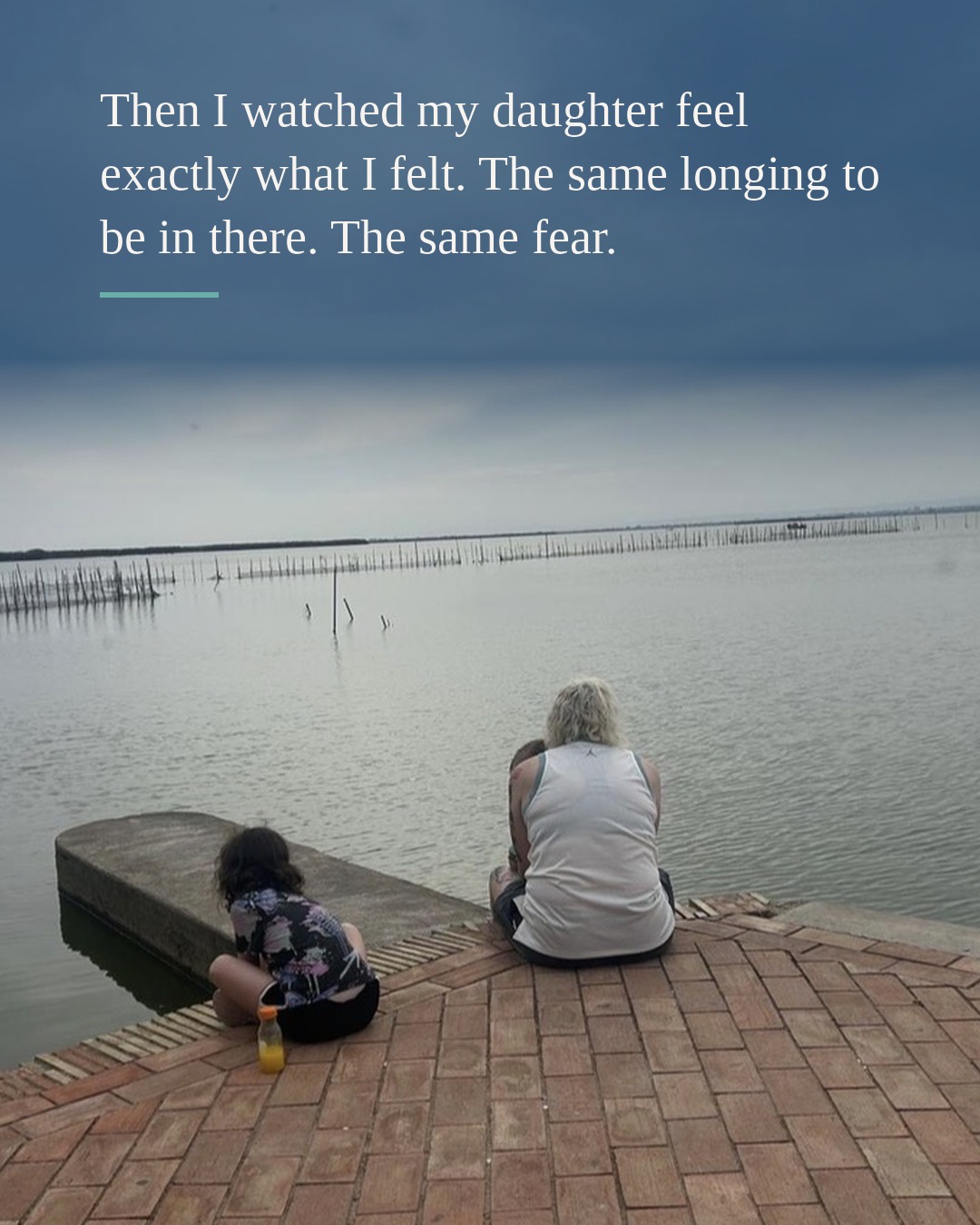
The more confident I became in the ocean, and the more I brought my children into that world, the more I saw in my eldest daughter the very same reactions I'd had as a child. Absolute intrigue, a longing to be in there — yet totally numbed by fear and anxiety, and unable to go through with it. Then, at the end of a day at the beach or a swim spot, utter devastation and upset that she couldn't join in.
I started to piece together my experience of the sea, and hers. As an adult I was diagnosed with ADHD, and chose not to pursue an autism diagnosis because of the cost — but my psychiatrist told me it was also a most likely one.
Everything aligned. I was, and am, obsessed with the sea. I wanted to be in it. I wanted to see that world below. But the overwhelming sensations — the cold, the sand, the waves crashing, the shadows — everything in my brain was multiplied by a thousand.
I still have those sensations and fears today. But with the understanding my diagnosis has given me, I can push through — and that is why, at forty-one, I am only now starting to do what was my calling all along.
And my daughter now has me to guide her through the overwhelm and the fear. We took our three kids to Thailand this year, and seeing her free of the cold, the wetsuit, the murky water, opened my eyes. She is just like me.
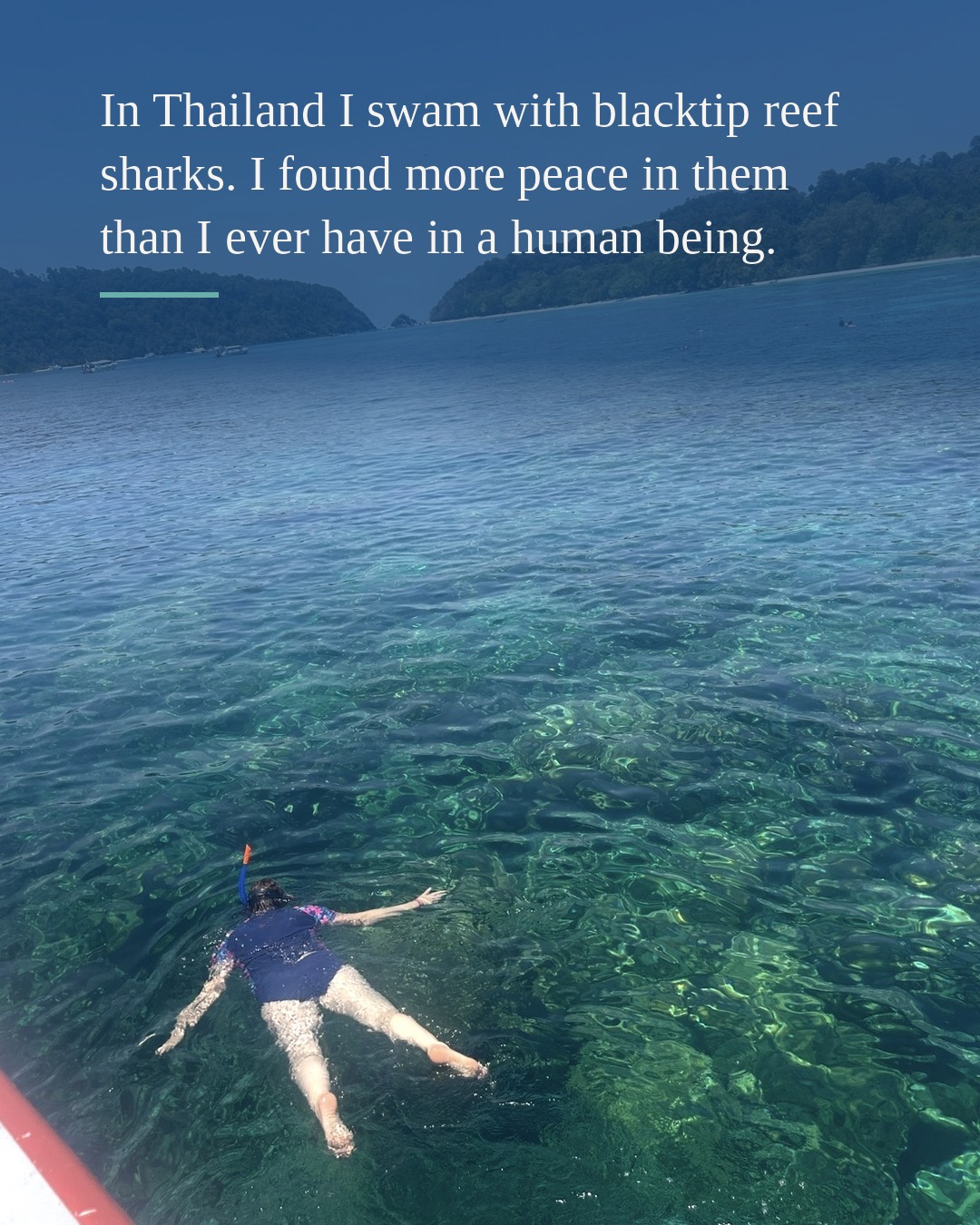
On that same trip, I got up at 6am one morning and swam out to a reef, where blacktip reef sharks joined me. It was the most calming, unbelievable experience of my life. I will never forget it — to come from a place where I couldn't even get into the sea, even though I wanted it more than anything, to swimming alongside sharks, looking them in the eye and feeling a connection I cannot describe. Sharks, the biggest fear planted into anyone's mind, and I found more peace in them than I ever have in a human being.
I took in the sensations: the ripples of the water, the reflection of the sun, the silence, the graceful movements of the sharks. And I was so still, and so grateful.
There are so many barriers in this world. To have a want, an urge, a need to be with something, while something in your brain tells you to stay away, is frustrating, debilitating and exhausting.
I see the hurt in my daughter's eyes when she can't jump into the sea like everyone else — especially as she watches her younger brother and sister jump in, no problem.
So this is what led me to today: a forty-one-year-old woman with three kids and a full-time job, finally living out her passion, because I finally understand where my fears came from. And now I have the ability to guide my daughter through hers — a complete understanding of her wanting to be in the sea, but physically not being able.
Awareness is a blessing.
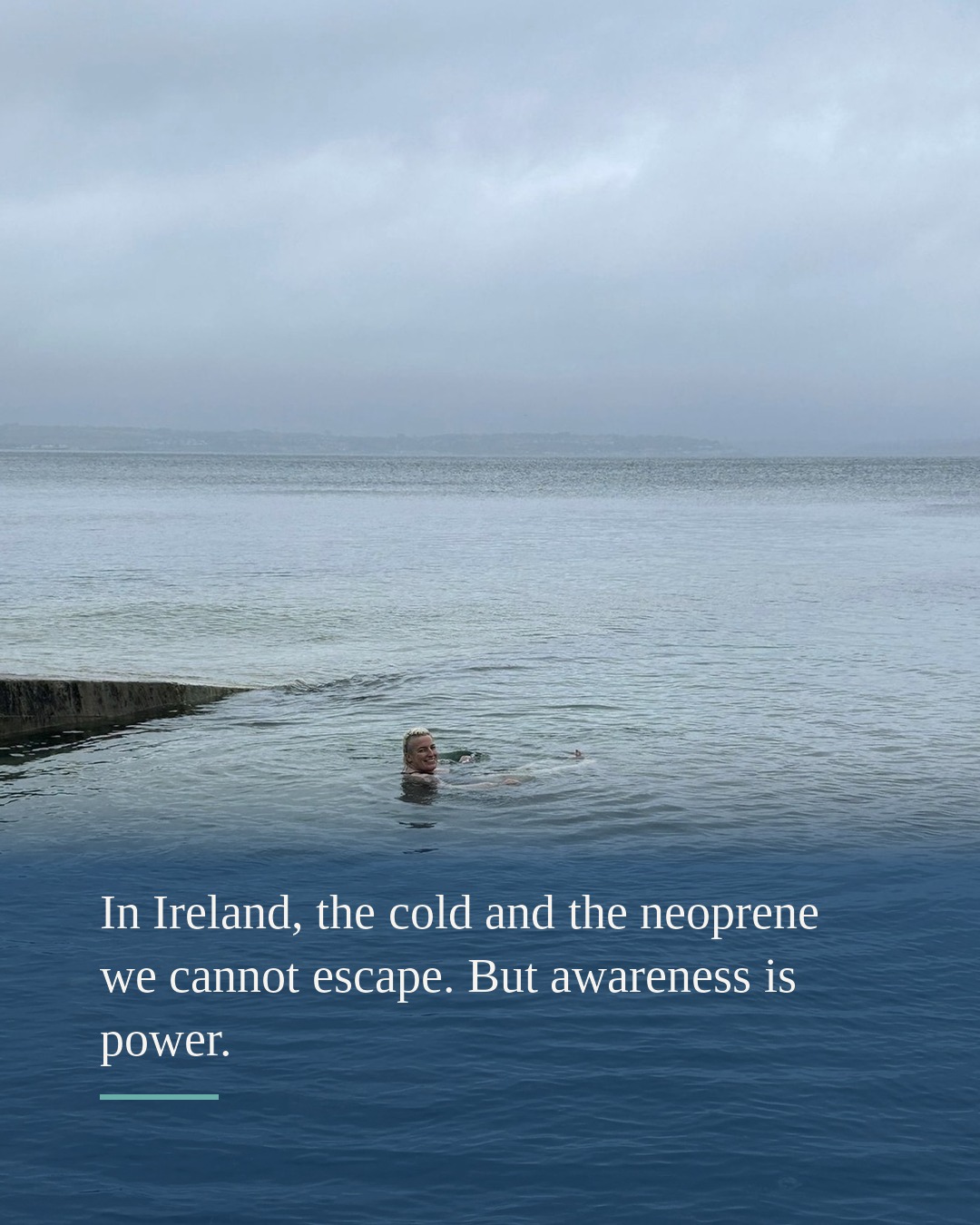
The sea is a sensory overload. Sand, cold, neoprene, seaweed, darkness, the unknown. In Ireland, the neoprene and the cold are things we cannot escape. So I'll guide my eldest daughter, every day, to understand why she feels the way she does.
I could have gone to college at eighteen and studied marine biology, but my fear overrode it. I'm grateful for the awareness I have now, and as a child of the eighties, I accept that things were different then. Now I'm finally getting myself to university, to give my brain the knowledge my body was never able to explore.
From forty-one years of wanting something and not being able to fulfil it, because I didn't know where my anxiety came from — to setting up Blue Biota, and hopefully inspiring others to become more aware of how much our oceans matter.
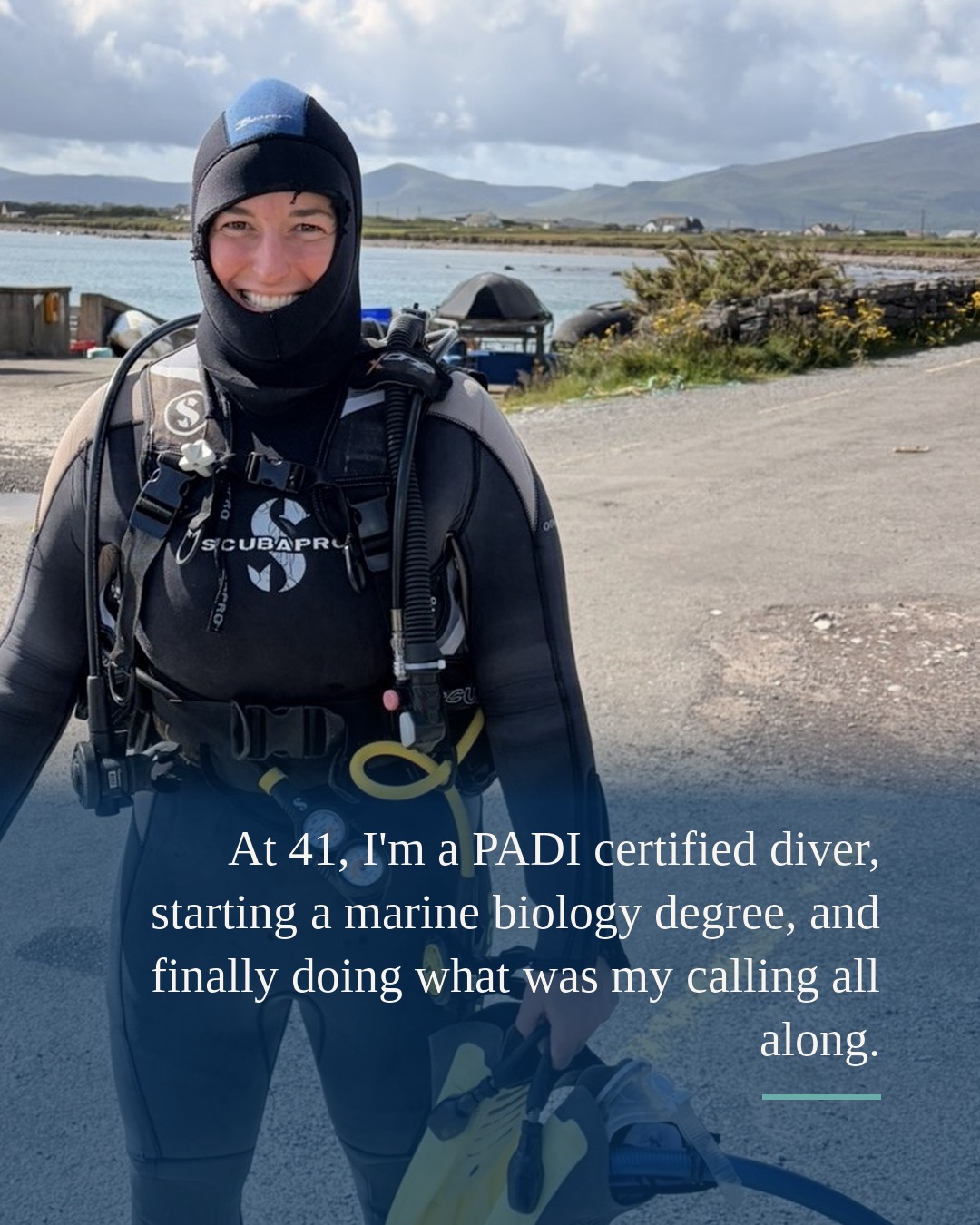
I am now a PADI certified diver, and I spend pretty much every weekend in the ocean, exploring the amazing life that occupies more of our planet than any other lifeform.
I plan to spend the next forty years of my life in the ocean. Yes, I still have those sensory experiences every single day. But awareness is power.